A Million Viewers, Zero Friends: The Quiet Crisis of Passive Entertainment
The Night the Stream Went Down
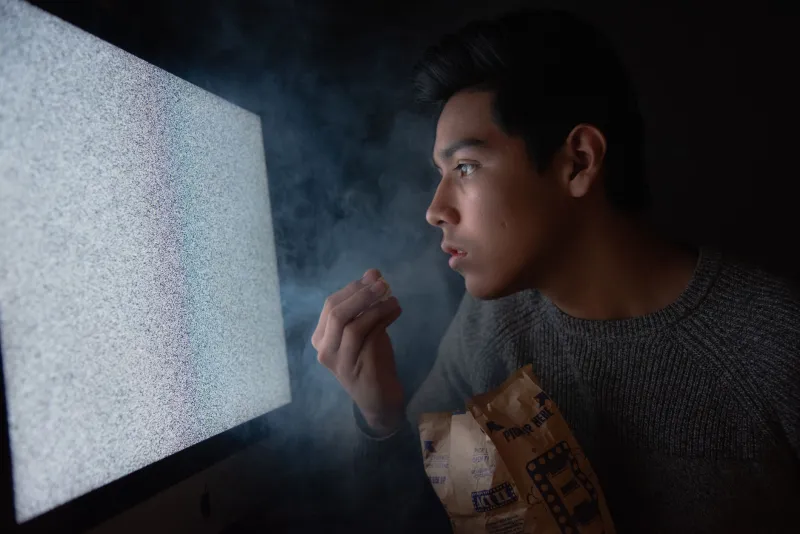
I want you to think back to a specific kind of evening — one most of us have had more times than we'd like to admit. You're watching a stream. Could be a gaming marathon, a live podcast, a watch party for some reality show everyone's into. There are 80,000 people in the chat. The chat is moving so fast you can't read it. You type something. It disappears in half a second, swallowed by the scroll.
And at some point, maybe around hour two, a thought surfaces that you don't quite let yourself finish: This is kind of lonely.
That thought is worth sitting with.
We Confused Audience With Community
The pandemic did something strange to American entertainment culture. When in-person connection got locked down, digital entertainment didn't just grow — it mutated. Streaming numbers exploded. Discord hit 300 million registered users. Twitch viewership doubled. Everyone was "together" online in a way that had never happened before at that scale.
But scale was exactly the problem.
What we built — or what the platforms built and sold to us — was the aesthetic of community without the substance of it. Millions of people watching the same thing at the same time creates a sense of shared experience, and that feeling is real. It's not nothing. But it's also not the same as actually knowing the people next to you.
Sociologists have a term for what we were actually experiencing: parasocial relationships — the one-sided emotional bonds people form with media personalities. Parasocial connection isn't inherently harmful. But when it becomes the primary form of social connection in someone's life, something important gets hollowed out.
"The pandemic accelerated a trend that was already underway," says one behavioral researcher who studies digital community formation. "People were substituting passive consumption for active social participation, and the platforms were incentivized to encourage exactly that because passive consumption scales and active participation doesn't."
The Difference Between Watching Together and Being Together
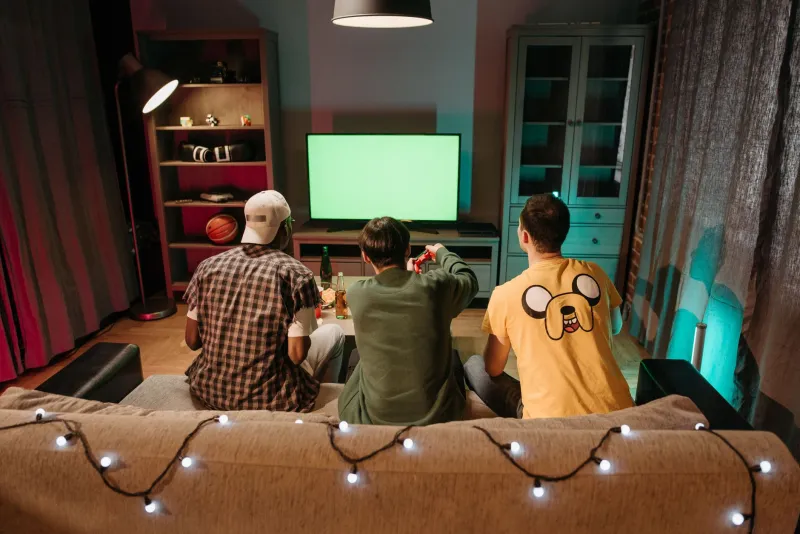
Here's a useful thought experiment. Think about the last time you watched something with a friend in the same room — not a stream, just a show or a movie. Now compare that to the last time you watched something alone while a chat window scrolled next to it.
The emotional texture is completely different, right?
When you're physically present with someone, there are a thousand micro-interactions happening that you barely register — a glance when something surprising happens, a shared laugh at the same moment, the comfortable silence of two people doing the same thing together. None of that exists in a 80,000-person stream chat. What exists instead is a kind of performance of reaction, a collective emotional display that you can witness but not genuinely participate in.
This isn't a critique of streaming or digital entertainment. It's an observation about what those formats are and aren't designed to deliver.
Passive consumption is genuinely pleasurable. Parasocial relationships with creators can be meaningful. But neither of them scratches the itch that actual peer connection scratches — the feeling of being known by someone, of mattering to a specific person in a specific moment.
Where the Void Is Being Filled
The interesting story right now isn't that passive entertainment is failing people. It's what's growing up around the edges of it.
Across the US, smaller peer-to-peer networks are doing something the mega-platforms can't: they're making people feel genuinely seen. Not by a creator who's performing for thousands, but by other members who are there for the same reasons they are.
The design philosophy behind platforms like BongdaLu Network leans directly into this — the idea that entertainment is fundamentally a social act, and that the connection between people experiencing something together is as valuable as the content itself. Share, connect, experience together. It sounds simple because it is. But simple and easy are different things.
Building spaces where people actually connect requires friction that most platforms have been trained to eliminate. Real communities have inside jokes, shared history, interpersonal dynamics, conflicts that get resolved, relationships that deepen over time. That stuff is messy and unscalable and absolutely irreplaceable.
"The communities that are actually helping people feel less isolated are the ones that ask something of their members," notes one community architect who has built several successful niche networks. "When you have to contribute — when your presence actually matters to the group — you're not a viewer anymore. You're a participant. That's a completely different psychological experience."
The Honest Conversation About Digital Loneliness
There's a discomfort in admitting that our digital entertainment habits might be making us lonelier, because we've invested so much in them — emotionally, financially, and in terms of sheer time. It's easier to believe that having 50 Twitch channels you follow is the same as having a social life.
It isn't. And most of us know that, even if we don't say it out loud.
The US Surgeon General's advisory on loneliness in 2023 wasn't subtle: Americans are experiencing a loneliness epidemic that has measurable impacts on physical health, not just mental wellbeing. Social isolation is now linked to outcomes as serious as smoking 15 cigarettes a day. And the report specifically called out that quantity of digital connection doesn't substitute for quality of real relationship.
This isn't doom and gloom. It's actually an enormous opportunity — for community builders, for platform designers, and for regular people who are tired of feeling like spectators in their own social lives.
What Actually Helps
The communities that are making a genuine dent in digital loneliness share a few common traits. They're small enough that members recognize each other. They involve doing something together, not just watching. They have enough structure to create shared identity but enough flexibility to let real relationships form organically.
Game nights where the game is secondary to the hangout. Watch parties where the chat is ten people who actually know each other. Creative collaborations where the work is shared and so is the credit. These aren't radical innovations — they're just digital versions of what humans have always needed.
The technology was never the problem. Screens didn't make us lonely. The design choices built into the platforms we use — choices that prioritize passive consumption, that optimize for time-on-platform over depth of connection, that measure success in impressions instead of relationships — those are what created the void.
The good news is that different design choices are possible. And the communities proving that are growing, one genuine connection at a time.