500 Followers, Zero People to Call: The Real Loneliness Nobody Talks About
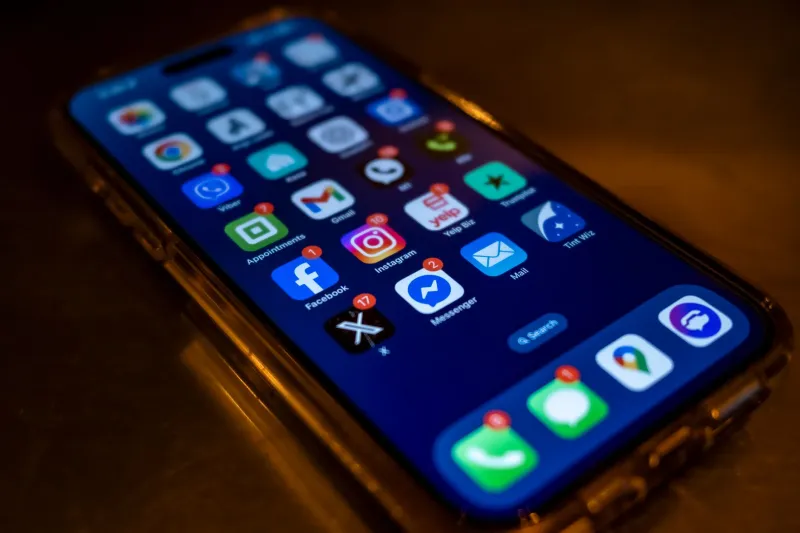
Picture this: it's 2 AM, something's gone sideways, and you need to talk to someone. You grab your phone — the same device that tells you 500 people follow your life — and you scroll. And scroll. And somehow, you can't think of a single person to call.
If that scenario hits closer to home than you'd like, you're not alone. Ironically.
We are, statistically speaking, the most "connected" generation in human history. The average American adult maintains somewhere between 300 and 600 social media connections across platforms. We like, comment, react, and share with people constantly. And yet, a 2023 Gallup survey found that nearly one in five Americans reports having no close friends at all. Something isn't adding up.
The Platform Problem Nobody Wants to Admit
Here's a hard truth about the apps we spend hours on every day: they weren't designed to make you feel deeply known. They were designed to keep you engaged. Those are very different goals.
Like buttons, follower counts, view metrics — all of it rewards breadth over depth. The more surface-level interactions you have, the better the algorithm treats you. You get a dopamine hit from a notification, the platform gets your attention, and the cycle continues. What doesn't get rewarded is the slow, sometimes awkward, often vulnerable process of actually building a real friendship.
Psychologists call this the "parasocial trap" — where the brain starts treating one-sided digital interactions as socially nourishing, even when they aren't. You watch someone's daily vlogs, you feel like you know them. You see a mutual's vacation photos, you feel caught up on their life. But that feeling of closeness is largely manufactured. Real relationships require reciprocity, and most platform interactions are fundamentally asymmetric.
The result? We're full. Socially full. Too many acquaintances, not enough intimacy.
Why Quantity Kills Quality
There's a concept in social psychology called Dunbar's Number — the idea, proposed by anthropologist Robin Dunbar, that the human brain can only maintain roughly 150 meaningful social relationships at once. Within that, you've got a much smaller inner circle: maybe five people you'd call in a crisis, fifteen you'd genuinely miss if they disappeared.
Now consider that the average Facebook user has 338 friends. Instagram, Discord, LinkedIn, TikTok — add those up and most of us are "maintaining" relationships with hundreds of people that our brains simply don't have the bandwidth to process as real.
What happens when you're cognitively maxed out? You go shallow across the board. Instead of investing time in a handful of people, you spread a thin layer of interaction across hundreds. You comment "omg same" on someone's post instead of texting them directly. You react with a heart emoji instead of sending a voice message. The effort feels equivalent, but the relational payoff is not.
Worse, the constant noise of a packed social feed makes it easy to feel like you're staying connected — even when you're drifting from the people who actually matter.
What Real Friendship Actually Needs
Researchers who study friendship formation — yes, that's a real field — point to a few consistent ingredients that turn an acquaintance into someone you'd trust with the messy parts of your life.
Time. Not passive co-presence, but actual shared experience over an extended period. This is why college roommates and coworkers who grab lunch together weekly tend to form lasting bonds. The hours accumulate.
Vulnerability. At some point, one person has to say something real — something that could be judged — and the other person has to not flinch. That exchange is the foundation of trust.
Continuity. Friendships need to be tended. A connection you check in on once a year isn't a friendship; it's a contact.
Now ask yourself: how many of your online interactions actually hit all three of those marks? For most people, the answer is a very small number — and those are almost certainly the people you could call at 2 AM.
Turning Digital Acquaintances Into Something Real
The good news is that online connections can become genuine friendships. It's just not the default setting. You have to be intentional about it, which runs counter to how most platforms nudge you to behave.
A few things that actually work:
Go direct, not public. Replying to someone's story is fine. Sending them a DM that references something specific they said — something that shows you actually paid attention — is how real conversations start. Public interactions are performances. Private ones are relationships.
Find a smaller room. Big follower counts and massive Discord servers are great for discovery, but terrible for depth. The communities where people actually get to know each other tend to be smaller — niche interest groups, tight-knit gaming circles, collaborative creative spaces where the same faces show up repeatedly. That repetition is what builds familiarity.
Create shared experiences, not just shared content. Reposting the same meme creates a moment of mutual recognition. Playing a game together, watching something simultaneously, working on a project — those create memories. Memories are the raw material of friendship.
Be the one who follows up. Most people are waiting for someone else to take the initiative. If you had a good conversation with someone online and thought "I'd actually like to talk to that person again," say so. It feels vulnerable. Do it anyway.
The Community You Actually Want
At BongdaLu Network, we think a lot about what it means to genuinely connect — not just to accumulate contacts, but to build something that feels real. The difference between a platform that leaves you feeling emptier the more you use it, and one that actually enriches your life, comes down to whether the interactions happening there can grow into something deeper.
The goal shouldn't be more connections. It should be better ones.
Your feed might be full. Your notifications might never stop. But if you can't name three people you'd feel comfortable calling in the middle of the night, it might be worth asking: am I building a network, or am I building a life?
Those aren't the same thing. And deep down, most of us already know which one we actually want.