Everyone's Watching, Nobody's Talking: How Digital Spaces Became Stadiums Full of Empty Seats
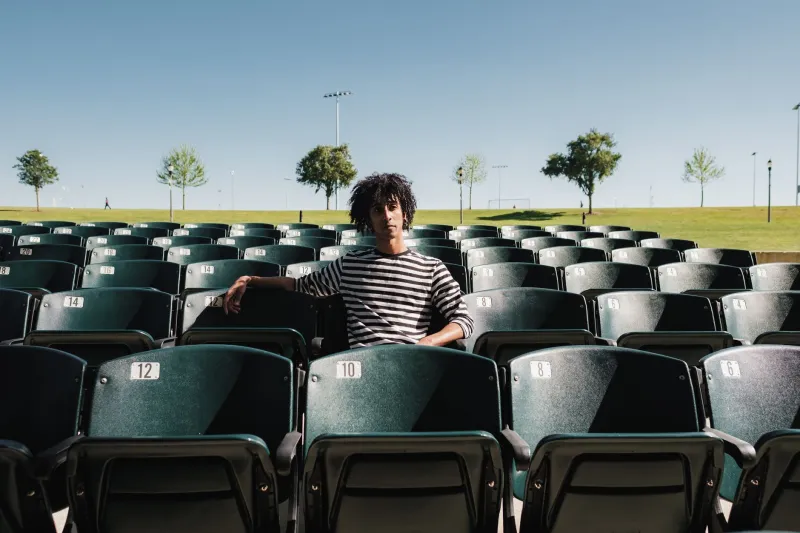
Picture a stadium with 40,000 seats. Game day, every single one filled. But nobody cheers, nobody argues over calls, nobody buys the overpriced nachos just to have something to do with their hands. They just... sit there. Watching.
That's basically what most online communities look like right now.
You've got Discord servers with thousands of members where maybe eight people post regularly. Subreddits with half a million subscribers where the same 200 voices dominate every thread. Facebook Groups that look impressive in a screenshot but feel like shouting into a parking garage. The bodies are there — the participation isn't.
And here's the uncomfortable part: most of us are the quiet ones. We scroll, we read, we maybe hit a thumbs-up reaction and move on. We're present without really being there. And that gap — between showing up and actually belonging — is one of the most undertalked problems in how we build community online.
The Psychology Behind the Silence
Social psychologists have a term for what happens when individuals in a group hold back because they assume someone else will act: the bystander effect. It was originally studied in emergency situations — the bigger the crowd watching something happen, the less likely any single person is to step in. Responsibility gets diluted. Everyone figures someone else has it covered.
Digital communities run on the exact same logic, just with lower stakes and a lot more memes.
When you join a server or a subreddit or a Facebook Group with thousands of members, your brain quietly does the math. There are so many people here. My comment won't move the needle. Someone smarter will say it better. I don't want to look dumb in front of strangers. So you lurk. And so does the person next to you. And the one next to them.
The result? A community that's technically full but functionally hollow.
There's also the performance anxiety angle. Posting in a public digital space — even a niche one — still feels like standing on a small stage. You're not just sharing a thought, you're putting a version of yourself out there for judgment. For a lot of people, especially in communities where gatekeeping and cliquishness have historically run hot (looking at you, certain gaming circles), that risk just doesn't feel worth it.
Lurking Isn't the Enemy — Friction Is
Here's where a lot of community managers get it wrong: they blame the lurkers. They post passive-aggressive announcements about "inactive members," run purges, threaten to archive channels. None of it works, because lurking isn't a character flaw. It's a rational response to friction.
Friction is anything that makes participation feel harder than it's worth. A community with no clear culture, no onboarding, no sense of what's okay to say — that's friction. A space where the first time you post, three veteran members dunk on you for not knowing the unwritten rules — massive friction. A platform where the interface itself is confusing or the notification system is a nightmare — yep, friction.
Lower the friction, and people talk. It really is that simple, even when it's hard to execute.
The communities that are genuinely thriving right now — the tight gaming circles, the creator fan hubs, the niche interest groups that somehow feel like a group chat with your actual friends — they all share one trait: they make it easy to say something small. Not every contribution has to be a think piece. A reaction, a two-word reply, a dumb joke that lands with three people — those micro-interactions are the connective tissue of real community.
What the Best Spaces Are Actually Doing Differently
There's a reason certain communities feel electric while others feel like a waiting room. It's not luck. It's design.
The communities worth studying are the ones deliberately engineering low-stakes entry points. Weekly threads with a simple prompt — "What are you playing this weekend?" or "Drop your current obsession" — give lurkers a reason to type something without needing to have a hot take ready. The prompt does the heavy lifting. All you have to do is answer.
Other spaces are leaning into structured interaction rather than open-ended posting. Game nights, watch parties, collaborative playlists, group challenges — activities where participation is baked into the format, not optional. When you're doing something together, the social pressure inverts. Staying quiet becomes the weird choice.
Moderation culture matters more than most founders want to admit, too. Communities where the tone is set early — where newcomers are welcomed genuinely, where the regulars don't haze, where bad faith comments get addressed quickly — those spaces feel safe enough to talk in. Safety isn't a soft concept here. It's infrastructure.
The Platform Problem Nobody Wants to Talk About
Let's be real for a second: a lot of the biggest platforms are structurally incentivized against participation from most users. The algorithm rewards content from established creators and power users. Regular people's posts get buried. The feedback loop is brutal — you post, nothing happens, you stop posting. Repeat until you're a permanent spectator.
This is part of why smaller, more intentional community spaces are quietly eating the lunch of the mega-platforms when it comes to actual engagement. When everyone in a space has roughly equal standing, when there's no algorithmic gatekeeping deciding whose voice gets amplified, the dynamic shifts. Ordinary members start to feel like their words land somewhere.
That's the whole premise behind building communities that prioritize connection over content consumption. It's the difference between a platform that treats you like an audience and one that treats you like a participant.
You're Allowed to Just Say Something
If you're reading this as someone who's been lurking in communities you genuinely like — this is your nudge. The comment you've been drafting in your head for three weeks? Post it. The question you think is too basic? Ask it. The reaction that felt too small to bother with? Leave it anyway.
The communities that matter are built by the people who showed up and said something, even when it felt a little awkward. Especially when it felt a little awkward.
Being present is the starting point. Belonging is what happens when you stop watching from the sidelines and actually get in the game.