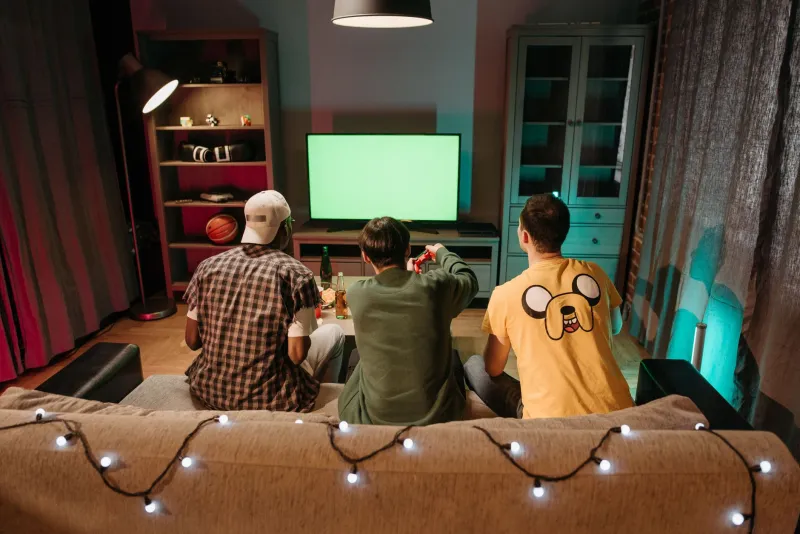
You're in 47 Servers and Still Eating Lunch Alone

The Paradox Nobody Wants to Admit
You've got a packed friends list. Your Discord sidebar looks like a stock ticker — servers stacked on servers, notification badges multiplying like rabbits. There's the gaming server from that one tournament, the fan community for a show you stopped watching, the local meetup group that never actually meets up. You're technically surrounded by people.
So why does Sunday afternoon feel so quiet?
This is the digital sprawl problem, and it's hitting harder than most people realize. We've built a culture around joining — smashing that invite link, adding another community to the pile — without ever stopping to ask whether we're actually in any of them. The result is a strange kind of social loneliness that's uniquely modern: you're never alone on paper, but you're almost always alone in practice.
How We Got Here: The Obligation Spiral
Part of this is just how online communities work. Someone you respect shares an invite. A game you love has an official server. A content creator you follow builds a hub for fans. Each one feels worth joining in the moment — low commitment, high potential upside. What's the harm?
The harm, it turns out, is accumulation. Social psychologist Robin Dunbar famously argued that humans can maintain roughly 150 stable relationships, with a much tighter inner circle of about five people. Our brains haven't evolved past that ceiling just because we got smartphones. But our join habits sure have.
Every new server you enter creates a low-grade social obligation. You feel like you should participate, should respond, should at least lurk. Multiply that by 40 or 50 communities and you've got a cognitive load that quietly exhausts you — without ever delivering the payoff of actual connection. Researchers call this "ambient awareness," the sense that you're keeping up with people when really you're just skimming the surface of dozens of relationships that never get any deeper.
Notification Fatigue Is Eating Your Social Energy
Here's something most people don't connect: the same mental bandwidth you're burning on notification management is the bandwidth you'd need to actually nurture a friendship.
Every ping you dismiss, every unread badge you ignore, every channel you mute — those micro-decisions add up. And they're not neutral. They train your brain to associate these spaces with work rather than enjoyment. Eventually, even the communities you genuinely like start to feel like obligations on a checklist rather than places you actually want to be.
This is the notification fatigue loop, and it's particularly brutal for people who are already in a lot of communities. The more servers you're in, the more exhausted you get. The more exhausted you get, the less you engage. The less you engage, the more you feel like an outsider in spaces you technically belong to. Rinse and repeat until you haven't really talked to anyone in three weeks.
Quality vs. Quantity: The Trap Everyone Falls Into
We tend to treat community membership like a portfolio — diversified, broadly spread, hedged against the risk of missing out. But real relationships don't work like index funds. They're concentrated investments. They require time, repetition, and a willingness to be somewhat vulnerable with the same people over and over again.
The communities where people form genuine bonds tend to share a few traits: they're small enough that you recognize names, focused enough that conversation has actual depth, and consistent enough that inside jokes have time to develop. That last one matters more than people give it credit for. Shared history — even something as low-stakes as a running meme or a memorable game night — is the connective tissue of real friendship.
Large, sprawling servers rarely create that. They can be great for discovery, for finding new games or creators or events. But they're not built for intimacy. Treating them like they are is like expecting to make a best friend at a stadium concert.
So What Do You Actually Do About It?
The good news is this isn't a technology problem. It's a habits problem, which means it's fixable.
Audit your community list ruthlessly. Go through every server, every group chat, every forum you're a member of and ask one question: Have I had a real conversation here in the last 30 days? If the answer is no, leave. Not mute — leave. The psychological weight of knowing you're in a space you never use is more draining than you think.
Invest in fewer, more specific spaces. Niche communities almost always outperform general ones for relationship-building. A server for fans of a very specific indie game will create tighter bonds faster than a massive multi-game hub. Shared specificity is social glue.
Show up consistently, even when it feels low-stakes. You don't have to post something brilliant every day. Reacting to someone's post, answering a question, sharing something you found funny — these small, repeated acts of presence are what signal to other people that you're actually there. Reliability is underrated as a social skill.
Create reasons for the same people to interact repeatedly. Whether you're running a community or just a member of one, recurring events — weekly game nights, monthly watch parties, even just a regular check-in thread — give people a reason to keep showing up together. At BongdaLu Network, we've seen this play out in real time: the spaces that feel most alive are almost always the ones with some kind of rhythm to them.
Don't be afraid to go smaller. If a big community isn't serving you, find five people from it who you actually vibe with and start a smaller group. A 10-person server where everyone knows each other is worth more than a 10,000-person server where you're just another username.
The Real Flex Is Depth
There's a quiet status game in online spaces around community membership — how many servers you're in, how many followers you have, how many groups you're part of. But the people who actually seem fulfilled aren't the ones with the longest lists. They're the ones who've found two or three spaces where they genuinely belong.
That's the shift worth making. Stop collecting communities and start inhabiting them. Your sidebar might get a little shorter. Your Sunday afternoons might get a lot less quiet.