Why the Weirdest, Most Specific Online Communities Are the Ones Nobody Can Stop Talking About
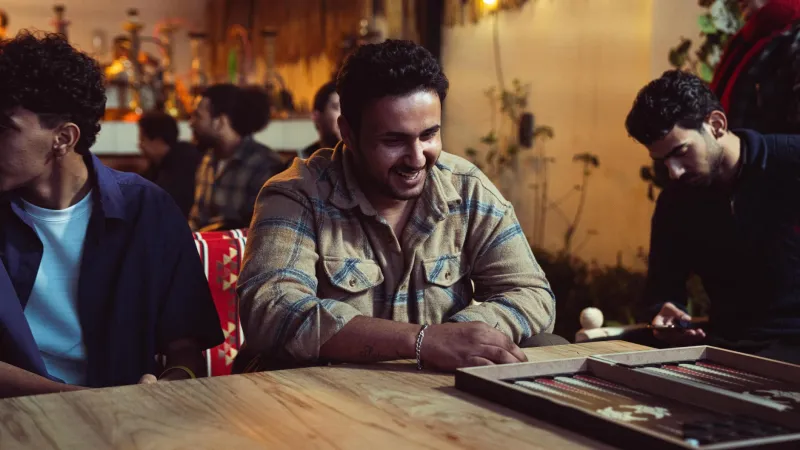
Somewhere on the internet right now, a group of forty people are having the most passionate, detailed, knowledgeable conversation you've ever seen about a card game most Americans have never heard of. They've been at it for three years. Their retention rate would make any social media platform jealous. And they have absolutely zero interest in growing.
This is the micro-community paradox, and it's reshaping how people think about online connection in 2025.
The Broad-Appeal Trap
For years, the logic of building online communities followed a simple formula: bigger is better. More members meant more content, more activity, more relevance. Platforms optimized for scale. Creators chased follower counts. Community builders measured success in raw numbers.
But something started breaking down. Huge communities — Discord servers with tens of thousands of members, subreddits with millions of subscribers — began feeling strangely hollow. Active participation rates dropped. Meaningful conversations got buried under noise. The bigger a space got, the less it actually felt like a community.
Meanwhile, something interesting was happening in the margins.
Small, Weird, and Completely Devoted
Take competitive Dominion players — fans of the deck-building card game that's been quietly beloved in board game circles since 2008. The online communities around competitive Dominion are tiny by any mainstream metric. But ask anyone inside them and they'll describe a level of engagement and shared knowledge that most large platforms can't come close to matching.
Or consider the hyperlocal gaming guilds that have sprung up in mid-sized American cities over the last few years. Groups organized not just around a specific game but around a specific region — players in Columbus who exclusively run tabletop RPG campaigns, or a group of competitive Rocket League players in Boise who've turned weekly online sessions into monthly IRL meetups. These groups aren't trying to scale. They're trying to deepen.
Deep is the operative word. What separates thriving micro-communities from dead large ones isn't activity volume — it's relevance density. In a niche space, almost every conversation is relevant to almost every member. There's no noise because there's no room for off-topic content. Everyone is there for the same specific thing.
The Specificity Advantage
Researchers who study online community behavior have a name for what makes niche groups stick: shared identity salience. When a community is focused enough, membership in it becomes part of how people think about themselves. You're not just someone who plays strategy games — you're a Twilight Imperium player who knows the Yssaril Tribes inside out. That specificity creates belonging in a way that broad interest groups simply can't replicate.
Denise, who moderates a Discord server dedicated to a single obscure 1990s anime series, describes it this way: "Everyone in our server has seen the show at least twice, most of them three or four times. When someone posts a theory or a piece of fan art, the whole server has context for it. Nobody has to explain anything. That's rare online."
Rare, and apparently very sticky. Her server of just over 300 members has a weekly active user rate that hovers around 60 percent — numbers that would be considered exceptional for a community ten times the size.
Case Study: The Hyperlocal Gaming Guild Model
One of the most compelling versions of the micro-community trend is the hyperlocal gaming guild — groups that combine a specific game focus with a geographic anchor.
A guild based out of Nashville that formed around competitive Magic: The Gathering drafts has become a case study in what this model can look like at its best. The group started with twelve people who knew each other through a local game store. They moved their coordination to a private Discord, started doing weekly online drafts during the pandemic, and never really stopped even after in-person play resumed.
Today they have 34 members — intentionally capped — with a waitlist of people who want to join. New members are admitted by vote. The community has a shared bank account for group expenses, a yearly retreat, and a group chat that's more active than most people's family texts.
"We could open it up and have hundreds of people," said one of the founding members. "But then it stops being what it is. The whole point is that we all know each other."
What This Means for Platforms and Creators
For anyone building online spaces — whether you're a creator, a community manager, or a platform designer — the micro-community trend carries a pretty direct message: stop optimizing for scale and start optimizing for fit.
At BongdaLu Network, the communities we see thriving are the ones where members feel like they belong specifically, not generally. The question isn't "how do we get more people in?" — it's "how do we make sure the right people feel completely at home?"
That shift in framing changes everything. It changes how you onboard new members, how you handle moderation, what content you prioritize, and how you measure success.
Going Niche Is a Strategic Choice, Not a Consolation Prize
There's still a cultural bias toward bigness that makes some creators and community builders hesitant to lean into niche identity. Smaller feels like settling. It feels like failure dressed up in philosophy.
But the data, and the lived experience of people inside thriving micro-communities, tells a different story. Going specific isn't giving up on growth — it's choosing a different kind of growth. Depth over breadth. Loyalty over reach. Genuine belonging over passive membership.
In a digital landscape full of massive, echoing spaces where nobody really knows each other, the weirdest, most specific communities might just be the most human ones left.